Showing posts with label building. Show all posts

Tuesday, March 24, 2009

Not Your Grandpa’s Church


Start a church? Really? Had I ever thought about it? Well, not out loud, but certainly I had dreamed. Maybe a better word is fantasized. However, over the years I had developed quite a stack of concerns about the modern church. Those concerns were magnified in the years I spent teaching ministerial candidates in the study center sponsored by the church. Then layer on top of that all the questions spawned by the tornado and then the subversive stuff Earl had given to me to read.
I knew one thing for sure: Tulsa didn’t need another church. There’s already one on almost every street corner, and another one pops up about every other week or so. They are as numerous and prolific as roaches.
That, despite the fact that the church in Oklahoma and across America hasn’t been growing for dozens of years. We’ve just been passing around the same people among us. Why would I want to build a church out of somebody else’s rejects? People who are disgruntled in one place will still be disgruntled when they show up at your place.
While we’re talking about shuffling people, Tulsa is the biggest of culprits. One preacher has a new revelation and builds up a big following. But then he can’t keep it in his pants, so another “man of the hour” comes along until he gets a wandering eye or an old skeleton knocks on his office door.
And church in Tulsa is big business—big names, big buildings, and big money. The smorgasbord of programs, groups, and activities makes the local churches without a doubt the largest providers of consumer services in the state. Church has become a pay-as-you-go, consumer-driven enterprise where money changes hands in exchange for “services rendered.” And those consumers (called members) have expectations.
And those expectations begin with: church is supposed to be the place where the God-stuff gets done. Where our children and youth are supposed to get discipled so we, their parents, don’t have to do it. Us too, for that matter. Disciple me so I don’t have to do that myself either.
Oh and, we need a place to discover and exercise our “gifts.” Especially the ones that the “world” can’t seem to appreciate. We need a place where we can be suckled and be healed and find meaning and purpose. And if we don’t feel we’re getting our money’s worth, we can move on claiming we weren’t being fed.
After I pondered all of this—all things I had experienced or witnessed—I concluded that if I was nuts enough to go through with it, there would have to be a major paradigm shift. Not just in the thinking but in our whole approach to “doing church.” If we decided to do it, it would not be; it could not be my grandpa’s church.

Wednesday, March 11, 2009

Associate Pastor of Music


I told you earlier that when the tornado hit, we did a lot of soul searching and rethinking as a church and particularly as a staff. We had time to think about what we were going to do when we got our newly reconstructed building with twice the space as before. We evaluated our strengths and looked honestly at the potential that was there.
Finally we decided that one of our strengths was our great staff relations and the talent that was contained therein. Phil, Darryl, and I were at times the three musketeers, the three tenors, or the three stooges, depending upon with whom you talked. We evaluated our strengths individually and collectively and looked at the giftings of the congregation as a whole. As a result we decided to do some restructuring.
We decided to change our titles to reflect a more unified and balanced pastoral approach. Darryl and I would both be associate pastors. And we decided to play to our individual strengths. Mine was music. And the giftings of the church as a whole included an incredible amount of musical talent. So I became the Associate Pastor of Music, and I took over the entire music program.
Darryl was the Associate Pastor of Students. And we let Phil keep his title as Senior Pastor.
Eventually we added Mike Atkinson to play the straight man. Not that he wasn’t really quick, really smart, and really funny. He was. And is. It’s just that we needed someone who could handle the business side. The three choleric sanguines needed a melancholy to balance us out. He became the Associate Pastor of Administration.
I really didn’t ponder it for very long, but I did wonder if I had been demoted. I decided quickly that it didn’t really matter. I was having a blast. I enjoyed the new challenge of a stellar music ministry. So I just put my head down and broke into a full sprint.
We had so much talent. In fact, while we were still at VBI, the orchestra would rehearse on Sunday afternoons. I had nearly 30 instrumentalists. One day the music guy from Victory came by to sit in on our rehearsal. We were a church of 500 people with an all volunteer orchestra of nearly 30 by then. While he had a handful of musicians in a church of 10,000. He was flabbergasted.
I could have been satisfied to stay there for a long time to come. But then came that Earl Creps guy and another tornado. Not a wind of destruction this time, but a wind of change.

Wednesday, January 28, 2009

The “Saul” Experience


The Israelite king David was anointed king long before the existing king Saul had died. So, to say there was some real tension between them would be a great understatement. You can read their story beginning at about 1 Samuel 16 and ending with Saul’s death in chapter 31.
Though Saul continued to try to kill David, David refused to kill Saul. And David let Saul know that he had had more than one opportunity to kill him but didn’t. In fact, 2 Samuel 1 tells the story of David’s grief over the loss of Saul. David only needed to know one thing: Saul was anointed by God and therefore once God had laid his hand on him, only God himself should take action against him. David’s own words on the subject can be found in 1 Samuel 26 especially verses 9 through 11.
I tell all of this in order to help the reader understand where some of us who have had a “Saul” experience are coming from.
Now, I have never had a pastor or anyone else trying to kill me and neither has any of my friends in ministry (except one). However, I do know what it is like to be subservient to someone who so obviously did not have my best interest in mind. Working for a pastor is like working for anyone else. We are all different. We all have strengths and weaknesses. We all have gifts and talents, but we also have a human side. And the human stuff is bone deep.
In Georgia I worked for a gifted man who was in way over his head. He had never pastored a multi-staffed church. He had never been surrounded by a board of deacons who were so adept at business and organization. And he had never had to head an explosive church.
On top of all that, we were almost forced into a building program within his first two years of service—a building program that would more than double the facilities. Anyone will tell you that a building program can overwhelm the most seasoned pastors. Frankly, I think he felt claustrophobic in the straight-jacket of administration.
He would stay away from the office for weeks—sometimes months—at a time. But that didn’t work for the deacon businessmen to whom he answered. So every now and then he would show up to micro-manage every aspect and department of the church. But that would only last for a short time. And during the long stretches in between, the rest of us on staff would have to fend for ourselves, make our own decisions, do the best we could, and lean upon one another. Eventually, we learned that many of his inadequacies were being blamed on us.
So, I had a choice to make. If I wanted to properly defend myself and preserve my job, I could have mounted a convincing campaign to have the guy fired based on so many things—things like incompetence, deception, and gross negligence. But I knew the experience of David and what the scriptures had to say about touching God’s anointed, no matter how unscrupulous he had been. Ultimately, I decided it was time to go rather than rat him out or continue to tacitly condone his behavior.
We left Georgia, returned to Oklahoma, took a $22,000 a year cut, and walked away. Not long after that, the pastor left the church and left the pastoral ministry. I was praying that this would be my one and only “Saul” experience. It was. This bad relationship was followed by several very good ones. I learned much from the next three pastors I worked for. They turned out to be very different from the first.

Sunday, December 28, 2008

Don’t Try This at Home


To say that this was only the beginning is a huge understatement. I found that once you start to ask questions, it’s really hard to stop. There were so many moments after the rebuild when I just couldn’t understand the whys. Why do we do what we do? Why do churches and their people expect what they expect and therefore demand what they demand? Let me hasten to say, this wasn’t about scurrilous people or evil intentions. It was about the system that we all inherited.
I mean, where did we get the idea that we needed a professional to do our preaching, praying, teaching, singing, caring, giving, helping, hoping, connecting and communicating with God? The scripture says very distinctly that there is only one mediator between us and God (1Timothy 2:5). In fact, we believed and taught the concept of the priesthood of every believer (1 Peter 2:9, Revelation 5:10). But what we did spoke so loudly that no one could hear what we were saying.
Like bad parents, we said one thing and did another. We were like, “Look, it’s easier if I just do it myself. You just sit there and watch me.” Or like a television program full of life-threatening stunts, “Don’t try this at home. We’re trained professionals.” Why are we surprised when that’s exactly what happens?
For about four years the church hosted and I headed a ministerial training program required by our denomination for credentialing. It was quite extensive—four years of work, more than thirty different classes. And although I tried to secure enough teachers for each trimester, I often got the privilege of teaching one or more classes each time. One of my favorites, one that became a bit of a diversion, was the subject of church history. I was fascinated with it.
Here’s the kicker. Once I had been through the destruction of a tornado and the questions that went with it, my understanding of church history became skewed to the point of confusion. But I wasn’t confused about the history. I was confused about what we had chosen to do with the knowledge we had.
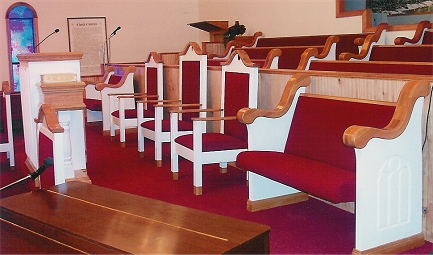
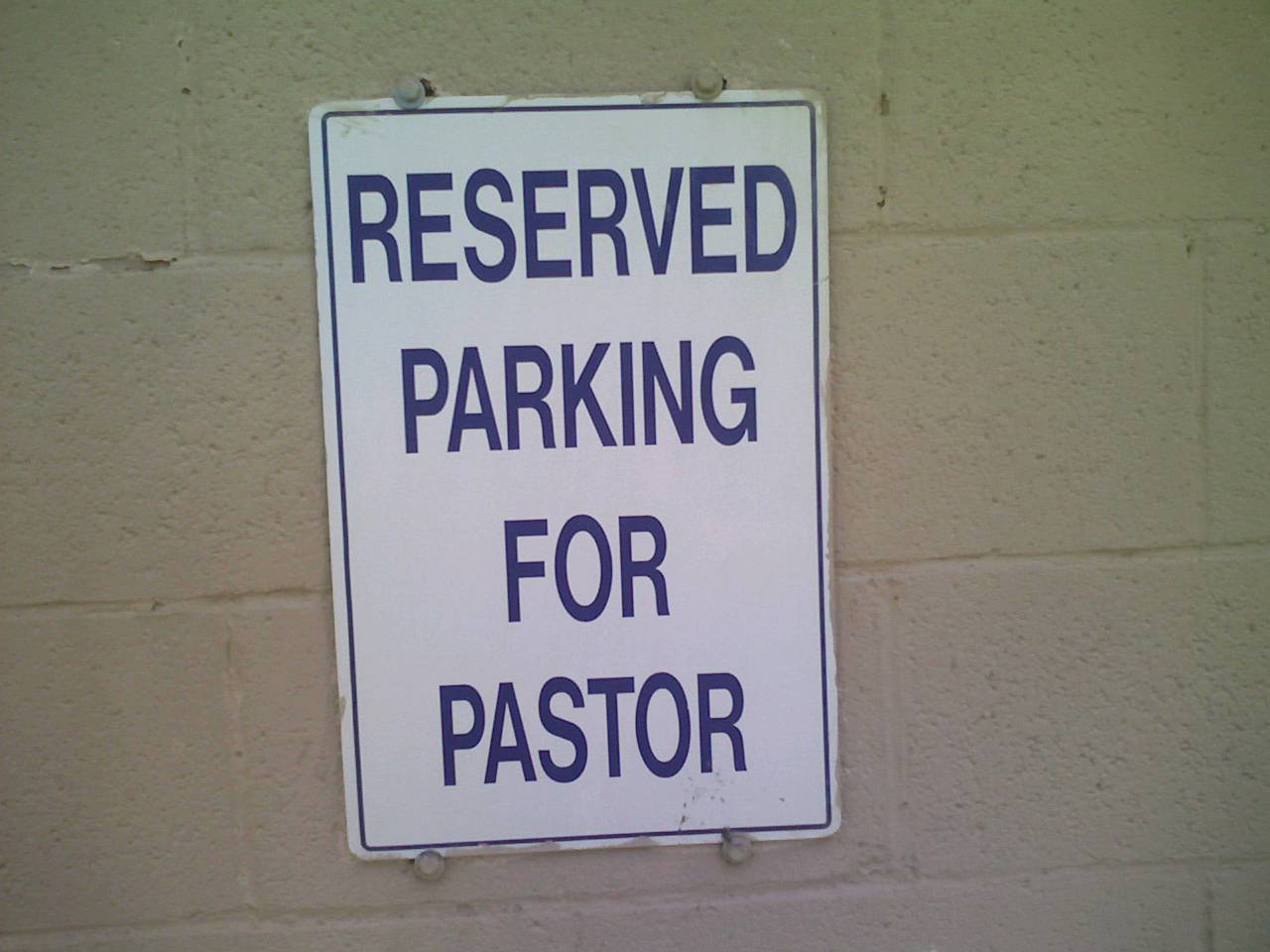
In my own tradition, I couldn’t see the New Testament pattern for pulpits, platforms, thrones, and reserved parking places which you can find in virtually every church. In other traditions, I couldn’t comprehend the spiritual significance of rituals, robes, confessionals, and funny hats. It seemed to me that Jesus had provided a replacement for all of that—himself.
Then one day, as if I needed “fuel on my fire,” I met up with a guy I had heard speak before. His name is Earl Creps. This man changed my life forever.

Sunday, December 21, 2008

Long Range Plans


Part of the process of deciding to rebuild and committing to stay on the same property was drawing up plans that would maximize the potential of those 10+ acres upon which Carbondale sits. Given the land we had, what is the largest size to which we could grow there? As the ideas were developed, our architect sketched out a three-phase plan.
The first phase was for the short term. This would answer the question: What will get us operating on that property again in the shortest amount of time? The second phase was a medium range plan that would get us up to the larger, more expanded size that we felt we needed as soon as we could afford it. And the third phase was the long range plan. It was the plan to construct as much building footprint, with the required adjoining parking, plus whatever infrastructure necessary in order to maximize the property.
The long range plan would include a new “sanctuary.” And that would determine just how big we could get without buying more property. Early on, it was discovered that we could likely build between a 1,200 and a 1,500 seat sanctuary and the accompanying meeting rooms, office space, and parking on that land.
Plus, we got the privilege of building a retention pond for about $85,000. This was made a requirement by the city and was officially called a “privately funded public improvement” or PFPI. In other words, we got to pay for fixing the city’s problem with drainage in our neighborhood. You can drive by and see that lovely monstrosity today. It was built before almost anything else.
This may be more than you need to know, unless you plan to build anything within the Tulsa city limits. Then it’s good stuff to hear. But here’s some more advice to go along with the above. We learned that you can fight City Hall. But you will lose.
Eventually we decided to opt for phases one and two, immediately. What’s an extra two million dollars among friends? But the third phase, the long range plan is still in the works even today.
Once the rebuild was finished and we had moved back onto the property, the details of the third phase started to take shape. We continued to meet with the architects, Paul Meyer and Gary Armbruster of Meyer Architects in Oklahoma City.
One night in the middle of all of this “long range” planning, I could not sleep. I tried everything. I tossed and turned—more like: flopped like a fish. I gave up, more than once, got up and read thinking that would make me sleepy. When that didn’t work, I tried reading the “begats” of the Old Testament. Even that didn’t work. I tried praying, begging God to kill me, tell me what he wanted, or let me sleep.
I finally decided that God was trying to get my attention.
“C’mon, God!” I pleaded. “All my friends get these elaborate dreams with deep meaning and obvious application to their current circumstances. Why can’t you do that for me? At least I would get to sleep!”
But no, not for me. Beside the fact that all my dreams are stupid, I finally surmised this was supposed to be some kind of direct encounter. I’m a little dense at times. At last, I gave in.
“Okay, God. What is it you want to tell me?”
Now, you would think that would be all the capitulation that God would need. And that he would just spit it out. I mean, believe me, I was all ears. But no. We were only half way through the night. And this was going to take all night.
I began my humble contrition by kneeling in the den by the couch upon which I had been sitting to read. No need to bother Vicki any more than I already had. She had mostly slept through my flopping anyway. I stopped begging and just shut up. Although, every now and then my brain would involuntarily scream, “What?!” In the deafening silence, I was trying to find a comfortable position from which I could hear the voice of God. In the process, I tried every position in the Yoga book and a few others I made up. Finally I ended up on my knees with my back arched over and the top of my head on the floor like a contortionist Muslim praying toward Mecca hell.
I wish I could tell you that I emerged from that horrible night with a lovely, illuminating, and Divine Word. I wish I could tell you that after that night everything changed. But none of that happened. However, while waiting to hear something really important, I couldn’t stop thinking about that stupid “long range plan.”
Specifically, the phrase that kept coming back to me was, “What will the church look like in 10 to 20 years?” So, I kept straining like a constipated man to come up with an answer to that question. And the only answer I could come up with was formulated out of the context in which we were already operating.
“Perhaps we ought to build something more like a theatre instead of a church sanctuary,” I thought. This was in keeping with our new emphasis on music and elaborate productions. So I envisioned a full production stage with fly-in scenery walls, multiple curtains, catwalks, and a sophisticated array of sound and lights. I even dreamed of an orchestra pit on hydraulics that would raise and lower into a basement rehearsal room. Some of those ideas actually got incorporated into the new sanctuary plans.
It never occurred to me back then that it was the question. The question was all I was supposed to take with me that night. I almost developed an aneurism trying to come up with an answer. But my answer was not the point. It would still be several more years before I would ask that question in a different context.
What will the church look like in 10 to 20 years?