Showing posts with label creps. Show all posts

Wednesday, May 27, 2009

Immerse Yourself in the Culture

One of the mistaken assumptions of early missions from the West to “less civilized” continents was that the countries being conquered, colonized, “civilized,” and proselytized were in some way inferior to Western culture. Anyone who has ever seen the 1980 Jamie Uys masterpiece “The Gods Must Be Crazy” realizes the absurdity of that thinking. Or if you know the story of Gandhi, whose moral superiority brought the British Empire to its knees, you can appreciate the hubris of such belief.

Thank goodness and hindsight that we are now teaching new candidates a better approach to “foreign missions.” At least in most schools we are embracing the worth and the beauty of cultural diversity. And we’re teaching aspiring missionaries how important it is to immerse themselves in the life and culture of the indigenous.

However, we Westerners are slow to learn. It is unfortunate that the same antiquated 19th century kind of thinking still goes on inside the minds of people at all levels in the American church. American Christians believe their way of life to be superior in every way to those outside the church. Therefore, we continue the conquer, colonize, civilize, and proselytize mentality of our forbears.

But what if we—like our foreign counterparts—were to immerse ourselves in the culture around us? What if we were to embrace the culture outside the walls of the church? Here in America. What would that look like? I’m not advocating sin. I’m not advocating promiscuity. What I am advocating is changing the TV channel away from Christian television and to the shows that are exploring spiritual matters. Try listening to NPR instead of Christian radio.

Current shows like “Lost” or “Heroes” or “Ghost Whisperer” explore spirituality. Even the prime-time cartoon “The Simpsons” poses questions and explores possible answers to the spiritual quest of some of its characters. And has done so for 20 years! In fact, Homer’s next door neighbor Ned Flanders (fictional graduate of Oral Roberts University) made the cover of “Christianity Today.” There are myriad ways to explore the culture without indulging in immoral behavior.

More importantly, what I am advocating is sitting at table with those who will never darken the door of a church. What I am advocating is befriending “prostitutes,” “tax collectors,” and “sinners.” Does that sound vaguely familiar?

What I am advocating is creating opportunities to be a light that is surrounded by darkness. A candle adds very little light to a room brightly lit with hundreds of other intense lights. And a light hidden under the “bushel” of church walls is no light at all.

Then, beyond sitting at table, we must listen to the hearts and the voices of those who find themselves outside our exclusive circle. The inventor of the stethoscope, RenĂ© Laennec, said, “Listen to your patients; they are telling you how to heal them.” Great advice for the church.

I love this quote from Earl Creps’ book Off-Road Disciplines: “Christian leaders today need to listen for the questions posed by those navigating our cultural perfect storm, regardless of the relationship of those voices to the Church. This sort of humility requires no compromise of orthodoxy but goes a long way toward defusing an often suspicious post-Christian audience, while maturing the Church in its devotion to Christ.” (p. 132)

Learning the language and immersing one’s self in the culture are the first two steps that will allow us to contextualize the message of Jesus for the people outside the church. Contextualization is the next step in the process.

Tuesday, March 24, 2009

Not Your Grandpa’s Church


Start a church? Really? Had I ever thought about it? Well, not out loud, but certainly I had dreamed. Maybe a better word is fantasized. However, over the years I had developed quite a stack of concerns about the modern church. Those concerns were magnified in the years I spent teaching ministerial candidates in the study center sponsored by the church. Then layer on top of that all the questions spawned by the tornado and then the subversive stuff Earl had given to me to read.
I knew one thing for sure: Tulsa didn’t need another church. There’s already one on almost every street corner, and another one pops up about every other week or so. They are as numerous and prolific as roaches.
That, despite the fact that the church in Oklahoma and across America hasn’t been growing for dozens of years. We’ve just been passing around the same people among us. Why would I want to build a church out of somebody else’s rejects? People who are disgruntled in one place will still be disgruntled when they show up at your place.
While we’re talking about shuffling people, Tulsa is the biggest of culprits. One preacher has a new revelation and builds up a big following. But then he can’t keep it in his pants, so another “man of the hour” comes along until he gets a wandering eye or an old skeleton knocks on his office door.
And church in Tulsa is big business—big names, big buildings, and big money. The smorgasbord of programs, groups, and activities makes the local churches without a doubt the largest providers of consumer services in the state. Church has become a pay-as-you-go, consumer-driven enterprise where money changes hands in exchange for “services rendered.” And those consumers (called members) have expectations.
And those expectations begin with: church is supposed to be the place where the God-stuff gets done. Where our children and youth are supposed to get discipled so we, their parents, don’t have to do it. Us too, for that matter. Disciple me so I don’t have to do that myself either.
Oh and, we need a place to discover and exercise our “gifts.” Especially the ones that the “world” can’t seem to appreciate. We need a place where we can be suckled and be healed and find meaning and purpose. And if we don’t feel we’re getting our money’s worth, we can move on claiming we weren’t being fed.
After I pondered all of this—all things I had experienced or witnessed—I concluded that if I was nuts enough to go through with it, there would have to be a major paradigm shift. Not just in the thinking but in our whole approach to “doing church.” If we decided to do it, it would not be; it could not be my grandpa’s church.

Tuesday, March 17, 2009

Everything Changes


Everything started to unravel the day Darryl told us he was taking a hike. He had been asked to return home to the church (First Assembly of God) in which he grew up in Bartlesville, Oklahoma. He had already seen from his experience with Phil and me that you can “go home.” It was explained to him that this was an opportunity to eventually become the pastor, because the senior pastor there was getting ready to retire. That’s a whole other story that I’ll let Darryl tell.
However, Darryl’s leaving meant the death of the “Dream Team.” It was a great nine year run. But, as they say, “All good things must come to an end.” For me, it was the end of a very good thing.
With all the stuff Earl Creps had put into my head, with Darryl’s departure, with major staff modifications, and my own growing discontent with the “status quo,” it was inevitable that things would come to a head. To Phil’s credit, he recognized it for what it was.
A staff disagreement over changes that were being made, some not for the better and I had a melt down. This could have gone a lot of different ways, but Phil saw what was happening. He called me in one day, and we sat down and talked like we had so many other times. When “stuff” happens, like it always will, it really helps to have a mutual respect and a sincere love for one another.
We talked about the church. We talked about the stuff we were reading. We talked about the changes and the clashes.
He said to me, “You know, I’ve been doing things this way for a long time, almost 30 years. And I don’t think I’m ready to change everything. Because that is what it would take.” He said, “But I’ve heard you say so many times, ‘If I ever pastored a church… I’d do this or that.’” He told me, “Plus, you know how much I love this church and all of its people, many of whom would have to be dragged through this kind of change.” And then he added, “But what if you did it? What if you started something new based on the stuff we’ve been reading? What if you planted a new church and we helped you?”
I was stunned. Was he serious?
What’s really interesting about all of this is that before I ever came back to Carbondale, Phil and I started talking about planting a church some day. In the late 80’s, inner-city churches were the cool thing to consider. So we had talked about that. In fact, the youth pastor before Darryl had left to plant an inner-city church in Oklahoma City. But, up until then, I had never thought about it being me. And I don’t think either of us could have anticipated that it would be this kind of church.
I left his office that day with my head spinning. I had said, “Are you serious?”
He said, “Yes, very serious. Go talk to Vicki, pray about it, and then let’s get back together and talk some more.”
So I said I would.
Almost immediately the wheels started turning. I wasn’t sure where it all was coming from. I started talking about the culture of a church and its core values over programs and doctrine. This was long before I read about it. I started thinking about the failure of preaching to achieve any appreciable change in behavior. And I started asking what a church would look like and feel like that would embrace all who walked through its doors.
From before the beginning, the seeds were planted that would become Agora. But there were still several steps to be taken and more questions to be asked before we discussed anything as drastic as a launch date.

Wednesday, March 11, 2009

Associate Pastor of Music


I told you earlier that when the tornado hit, we did a lot of soul searching and rethinking as a church and particularly as a staff. We had time to think about what we were going to do when we got our newly reconstructed building with twice the space as before. We evaluated our strengths and looked honestly at the potential that was there.
Finally we decided that one of our strengths was our great staff relations and the talent that was contained therein. Phil, Darryl, and I were at times the three musketeers, the three tenors, or the three stooges, depending upon with whom you talked. We evaluated our strengths individually and collectively and looked at the giftings of the congregation as a whole. As a result we decided to do some restructuring.
We decided to change our titles to reflect a more unified and balanced pastoral approach. Darryl and I would both be associate pastors. And we decided to play to our individual strengths. Mine was music. And the giftings of the church as a whole included an incredible amount of musical talent. So I became the Associate Pastor of Music, and I took over the entire music program.
Darryl was the Associate Pastor of Students. And we let Phil keep his title as Senior Pastor.
Eventually we added Mike Atkinson to play the straight man. Not that he wasn’t really quick, really smart, and really funny. He was. And is. It’s just that we needed someone who could handle the business side. The three choleric sanguines needed a melancholy to balance us out. He became the Associate Pastor of Administration.
I really didn’t ponder it for very long, but I did wonder if I had been demoted. I decided quickly that it didn’t really matter. I was having a blast. I enjoyed the new challenge of a stellar music ministry. So I just put my head down and broke into a full sprint.
We had so much talent. In fact, while we were still at VBI, the orchestra would rehearse on Sunday afternoons. I had nearly 30 instrumentalists. One day the music guy from Victory came by to sit in on our rehearsal. We were a church of 500 people with an all volunteer orchestra of nearly 30 by then. While he had a handful of musicians in a church of 10,000. He was flabbergasted.
I could have been satisfied to stay there for a long time to come. But then came that Earl Creps guy and another tornado. Not a wind of destruction this time, but a wind of change.

Sunday, January 4, 2009

Three Churches


During the time when we were all reading the subversive materials that Earl Creps (Motto: “With a name like Creps, it’s got to be good.”) recommended to us, we talked at intervals about what we were reading. Finally one day, Pastor Phil said, “You know, I’ve done things this way for almost thirty years. I can’t see me changing everything at this stage of the game. Besides, I love this church and its people. This is home. It’s where I grew up. I just can’t bear the thought of what such a change would do to so many of them.”
I had to agree that it would take a huge paradigm shift and a painful and bloody battle to turn such a big ship at full speed. However, we did think it would be nice to see some different churches and how they operated. Maybe we could tweak things a bit. So, I was given a short sabbatical in the month of June 2004 in order to visit some churches that we thought might be able to teach us something.
I called a couple of friends who are well traveled, told them what we were doing, and asked them where they would recommend that I go. Besides a couple of places locally, we decided to go to three churches: New Life Church in Colorado Springs, Fellowship Church, and Prestonwood Baptist, both in the metro Dallas area. Thus, on two different weekends in June of 2004, my family and I made the trips to Colorado and to Texas to observe and evaluate what we saw and heard.
Now, keep in mind, I was still the associate pastor over music. So, I was primarily going to check out the music programs as well as going to assess the overall church experience. We had very little idea of what to expect. But, each one of the experiences blew our minds.
New Life Church was a well oiled machine. It was big and still growing. They were building their current sanctuary while we were there. The music was great; the preaching was above average. But the two things that impressed me the most were the small group concept and the large umbrella concept under which each of its different congregations operated.
New Life was, at one time, several different congregations meeting at different times with different pastors. Sunday mornings, Sunday nights, Saturday nights, and each of the age group churches (youth, young adults, kids) were given equal standing. And, it seemed, that little care was taken to see that they overlapped each other. Whether or not it was that way behind the scenes, was not clear.
Prestonwood Baptist in Plano, Texas was huge! The sanctuary seated thousands. The choir loft alone seated 350 people. That’s twice the size of the average church. Its gargantuan size alone made it worth seeing. But, here again, I saw the multiplicity of ideas at work.
During the Saturday evening service we attended, under the same roof, but far enough away from the main sanctuary and parking lot, there was a wedding taking place in their “small” 400 seat chapel. Other than our curiosity and our roaming after the service, we would never have known that something so significant was going on in another part of this giant edifice.
Finally, we saw Fellowship Church (just seven miles from Prestonwood) in Grapevine, Texas. (Yes, just across the highway from the huge outlet mall.) Its pastor, Ed Young, is something of a celebrity. He writes books and gets asked to speak all over the place. Not many people start a church and within 10 years have 14,000 people. I have no idea how big it is now.
What I saw there that I took home with me was the relevant teaching and the visual message that the whole experience was. It was the first time I had ever been in a church where the two main speakers sat in big leather chairs and had a conversation in front of the whole crowd. Blew my mind.
When I went back to work after three or four weeks, I had a report prepared, but I wasn’t sure who to give it to. I knew we were never going to go there. So what was I supposed to do with all of this mind-blowing information?

Wednesday, December 31, 2008

“What Do I Do Now?”


“May I speak with Earl Creps, please?”
“Yes, may I tell him who is calling?”
“Yes, Jeff Taylor.”
“Thank you, Mr. Taylor. Will you hold please?”
“Surely.” (I know. Weird, but that’s what I always say.)
(Pause.)
“This is Earl.”
“Earl, my name is Jeff Taylor. You don’t know me from Adam, but I heard you speak a while back in Branson at the Oklahoma Minister’s Retreat.”
“Yes, Jeff.”
“Earl, I want you to know that I’m totally screwed up now, and I want to know what I’m supposed to do about it.” (Long, silent pause.) Once I realized that he probably thought I was a crank, I hastily added, “And, hey! I mean that in the best possible way. I just need to know what I ought to read or what you would recommend that I do now.”
I could swear that I heard him lightly exhale.
Obviously relieved, he said, “Well I can recommend to you several books and a couple of websites that you might check out…”
We chatted some more. I don’t remember the rest of the conversation. But I do remember the books he recommended, some names he gave me, and at least one of the websites. Since I was new to almost all of this, he led me to resources I could put my hands on that would help explain some of those words and phrases he used in his teaching: Postmodern, post-Christian, emerging church, and others.
From the beginning, I was like a thirsty man desperate for a drink. I couldn’t get enough.
Some who are following the story have asked about the response of others that day. Looking back, I am still astonished by the lack of response to Earl’s message. It was obvious that everyone there realized the truth in what he was saying. However, I was a ticking time bomb, and Earl lit my fuse. No doubt I was waiting for something that would explain the restlessness in my heart since the tornado. So, without realizing it, I was prepared like no one else in the room that day for what he shared.
The staff I was working with at the time was also affected by it. We talked at length. We even read some of the books and talked about how we might integrate the information into our church. I’ll let you in on the progression of that conversation a little bit further on.
I wish I could tell you that the tectonic plates shifted and we immediately made plans to put this new information to work for us and for Tulsa. But we were too steeped in our Modern model, and there were more events to come, some good, some really bad, before a new model would emerge.

Sunday, December 28, 2008

Three Chairs


As a church staff member, we were privileged to be sent to several functions every year that were intended to be valuable to the church’s ministry as well as beneficial to the individual minister. One such function was called “Minister’s Retreat.” It was designed to be a casual time of teaching and fellowship with other ministers.
In 2003, Minister’s Retreat was held in Branson, Missouri. And the special speaker was a man named Earl Creps. I had heard him before in another capacity, so I knew that he was a great communicator. But this time I had no idea what was in store. We had survived a tornado. Would I survive the personal earthquake I was about to experience?
Earl spoke about three chairs. Now there was some other really good stuff, a scripture, a series of alliterative words, and an encouragement to “live and let live.” But the three chairs will always be with me.
In each chair he seated a volunteer: a sixty-something, a forty-something, and a twenty-something—all pastors. Since this was a casual affair and in order to further clarify the illustration, he gave the older man in the first chair a tie, the middle chair man a polo shirt, and the young guy a ball cap. He said that these three pastors corresponded to the three different styles of churches.
The church represented by the man in the tie, he called the traditional church. Maybe not in the same way you might think. Although he said it was usually skewed older—builders primarily—and had its inheritance from the past. He compared this church to the television program “Gunsmoke.” He said that most everything for them was black and white. He also compared them to the church in Jerusalem—the founding church. And, that they believed they would always be the only way to do things. But then they had children.
The church represented by the man in the polo shirt, he called the contemporary church—primarily boomers. He said that 60% of the churches out there fall into this category. He compared it to the television program “Frasier” and to the church at Antioch. He said that these churches were based on models created pragmatically by peers. So whereas the traditional church looked to the past, the contemporary church looks to each other. It is characterized by scripted Sunday morning productions and values similar to the traditional without the wherewithal to live it out.
Finally, Earl came to the third chair. I had no idea where he was going. He began talking about the children of boomers. (I have three of those.) He used terms like emerging church, experimental church, postmodern, and post-Christian. He talked about a generation of the tattooed and the pierced. He said that it was a church characterized by the passion, energy, zeal, and idealism of its people. He compared them to the television show “Seinfeld” and its vacuous existentialism. He also compared it to the church in Spain referred to by Paul in Romans (Romans 15:28) and pointed out that we have no record that Paul ever made it there. But, Earl said that this was the indigenous church of the 21st century.
I had never heard of it.
Listening back to a later version of this talk, I am amazed at how mild and non-threatening the message was. The podcast on Earl’s website was recorded several years after I heard him speak, so he may have tempered it based upon his audience. But when I heard it, it rocked my world.
I went home from Branson and lost sleep and more hair. I didn’t know what to do with the information I had been given, but I knew who would know.
I called Earl.

Don’t Try This at Home


To say that this was only the beginning is a huge understatement. I found that once you start to ask questions, it’s really hard to stop. There were so many moments after the rebuild when I just couldn’t understand the whys. Why do we do what we do? Why do churches and their people expect what they expect and therefore demand what they demand? Let me hasten to say, this wasn’t about scurrilous people or evil intentions. It was about the system that we all inherited.
I mean, where did we get the idea that we needed a professional to do our preaching, praying, teaching, singing, caring, giving, helping, hoping, connecting and communicating with God? The scripture says very distinctly that there is only one mediator between us and God (1Timothy 2:5). In fact, we believed and taught the concept of the priesthood of every believer (1 Peter 2:9, Revelation 5:10). But what we did spoke so loudly that no one could hear what we were saying.
Like bad parents, we said one thing and did another. We were like, “Look, it’s easier if I just do it myself. You just sit there and watch me.” Or like a television program full of life-threatening stunts, “Don’t try this at home. We’re trained professionals.” Why are we surprised when that’s exactly what happens?
For about four years the church hosted and I headed a ministerial training program required by our denomination for credentialing. It was quite extensive—four years of work, more than thirty different classes. And although I tried to secure enough teachers for each trimester, I often got the privilege of teaching one or more classes each time. One of my favorites, one that became a bit of a diversion, was the subject of church history. I was fascinated with it.
Here’s the kicker. Once I had been through the destruction of a tornado and the questions that went with it, my understanding of church history became skewed to the point of confusion. But I wasn’t confused about the history. I was confused about what we had chosen to do with the knowledge we had.
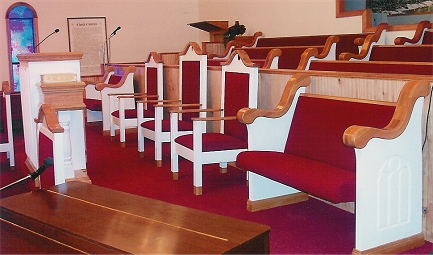
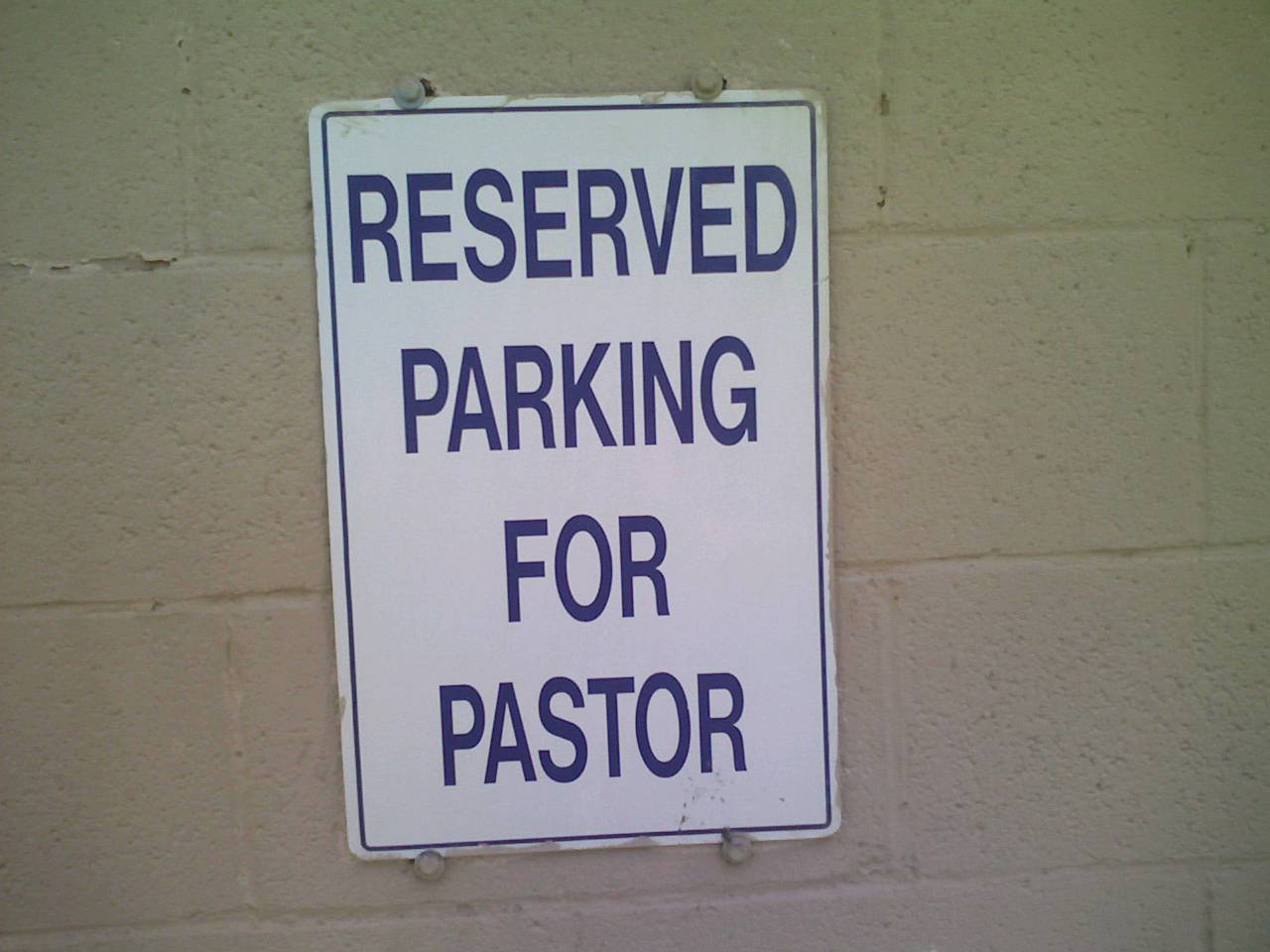
In my own tradition, I couldn’t see the New Testament pattern for pulpits, platforms, thrones, and reserved parking places which you can find in virtually every church. In other traditions, I couldn’t comprehend the spiritual significance of rituals, robes, confessionals, and funny hats. It seemed to me that Jesus had provided a replacement for all of that—himself.
Then one day, as if I needed “fuel on my fire,” I met up with a guy I had heard speak before. His name is Earl Creps. This man changed my life forever.