Showing posts with label church history. Show all posts

Tuesday, September 20, 2011

What is a “Funk and Wagnall’s”?


A couple of my friends (family) have brought up the Orthodox and Roman traditions of following the “church calendar.” This something I truly admire. Unlike many Protestants, it is something of which I am starkly aware. If you have no idea what I am talking about you can research it here. Not just everyone in a local congregation follows it. The whole church, all over the world, follows it. It’s brilliant, really.

However, as much as I like this part, it is a practice that doesn’t go far enough for me and for two reasons. From what I have learned, this is a new generation that is unlike any before it. And they are filled with contradictions. First, they are a fatherless generation, so they are very leery of patriarchal systems. But secondly, in what seems to be a contradiction, they so badly need to be heard. Perhaps it is a direct consequence of such a paternal deficiency that they need to be heard.

Let’s unpack this seeming contradiction. First of all, they are known as a “fatherless” generation. This is arguably the distinguishing characteristic of the kids who are growing up in today’s world. Now stack that on top of the fact that they have more information and input at their fingertips than any previous peoples. Social networks, search engines, and even their favorite bloggers have more impact on their lives and their beliefs than strangers who claim to be “experts” ever will.

They display their lives online—at least the part they want you to see. They count on Wikipedia but have no idea what a Funk & Wagnall’s is, or was. The vast majority of them (90%+) have uploaded data, videos, and/or photos onto the internet. This generation was “born” online. That is why those born since 1990 are referred to as the iY Generation.

Dr. Tim Elmore wrote the book Generation iY: Our Last Chance to Save Their Future. In his promotional video for the book he says, “When I look at students today and schools (read churches) today, I see a gap. Students today are primarily right brain thinkers; schools (churches) are primarily left brain delivery. Students want to upload their own thoughts; schools (churches) insist on downloading information. And this chasm has led to a disconnect between adults and this emerging generation of kids.”

With so much peer influence, available data, plus paternal rejection, why would they seek out a pastor, a priest, or even a heavenly Father for exclusive input on matters of faith?

If you really want to do some research on this you could read this or this. If you don’t want to understand Generation iY, then you have the answer as to why we are having problems reaching them—indifference and a lack of understanding by the older generations. If you want to go even deeper you should read Elmore’s book.

But secondly, besides being dubious of single source authority, this generation, like no other before it, needs to be heard. Elsewhere on this blog, I have quoted author and former director of Alpha USA Todd Hunter. He says, “It used to be that people primarily listened their way into Christian faith. That made the Christian role talking: defending the faith, explaining the faith, doing apologetics, preaching, writing tracts, etc. While that reality is not entirely gone, these days outsiders are increasingly talking and observing their way into faith. They need to tell their story and see if Christianity is real. This major shift is difficult, because right when seekers are looking instead of listening, the church is at a high mark of un-Christian living. Transformation into Christlikeness has always been the goal of Christianity. Now it is utterly strategic—the future of the faith in the USA, humanly speaking, depends upon it.”

This makes our job listening and living it—two things we don’t do very well. What can the church do? Well, can we rethink our delivery? If not, we may need to prepare ourselves to lose an entire generation. How about simply changing our approach from, “Here’s the truth and you had better believe it and act this way!” to, “Here’s what Jesus said! Here’s my experience. Now, how do you think we’re supposed to live that out?” And then we shut up and listen to them. Not just one Sunday or one Wednesday, but every time we come together. Then that “format” becomes our liturgy.

That’s what happens every time we meet at Agora. Maybe you have a better suggestion. I’m wide open. Our community has evolved and hopefully is still evolving. I say all the time that we don’t think we have it nailed. In fact, I think the idea that we think we need to have “it” nailed is a major deficiency in the universal church today. (“It” meaning message and method.)

Here’s the thing. Could we possibly have enough trust in God and faith in our kids that they could hear from the Holy Spirit for themselves, beginning at a fairly young age? And that between them and us, we could work things out? That sounds like community to me. In our experience, it feels like a community too—wrestling with the questions, the words, the works, the faith, the doubts, the struggles, and the successes.

Finally, we must find a way to allow the kids to play a major role in the conversation. Not just around the Sunday lunch table, but where it matters most—around the Lord’s Table.

Monday, May 25, 2009

"Missionaries" to Tulsa

Sometimes just thinking gets me in trouble. I guess it’s not really the thinking; it’s when I open my mouth about what I’m thinking. When I was studying for the credentialing process, I started wondering: Why do pastors and missionaries go through a completely different set of courses from each other? (Am I the only guy who wonders about stuff like this?) I know that the Bible materials, the hermeneutics, the homiletics, and other things are the same. But, aren’t these two considered (in most Bible schools and seminaries) different schools, or at least different departments? Pastoral ministry on the one hand and missions education on the other?

Why?

Now, I know that I didn’t go to a Bible college or a seminary, but I have a lot of friends who did. A lot of friends. Close, personal friends. Plus, I had to take a miniature version of “Bible school” at the institute level in order to become ordained. We’re talking 33 courses on everything from church history to church polity, from Roberts Rules of Order to the most basic of doctrines—orthodoxy, and orthopraxy—with a little preaching, a little administration, and a little leadership thrown into the mix. So I have a clue.

Don’t get me wrong, I’m not foolish enough to think of my education as an equivalent to that of the greatest American seminaries. I am well aware that I drew the short stick there. But, I was only required to take one course on cross cultural communications and another on world religions. And according to my unscientific surveys of friends, that’s not too far off from “real” Bible schools.

In the last 10 years, I’ve done quite a lot of self-educating in the study of missiology. (Once again, the short stick, on the short bus.) And I have been surprised at what I have learned. Your experience may be different from mine. However, after a childhood of observing shaky 16mm movies of missionaries who had turned naked African “savages” into Americanized “Christians” wearing shoes, long pants, white shirts, and ties, it wasn’t hard for even a child to see what was wrong with this picture. Needless to say, many years ago I bought into a more indigenous method. At least with regard to “foreign” missions—a method that did not violate the “Prime Directive.”

But more recently, in the starting of a new church, I came to the conclusion that while this method is being used all over the world (hopefully), it hasn’t been tried in America—at least not in the last 50 years, if ever. And, with church attendance at less than 20% of the American population on any given Sunday, it might be time to appropriate indigenous mission methods on American soil.

You can take this or leave it, since I am the “short stick” guy. But I have been working on a five step summary of the indigenous method. So, at the risk of over-simplifying, here are the basics of how one might accomplish such an endeavor. I will merely list the steps here, but I will attempt to explain each one with a succeeding blog chapter.

1. Learn the language.
2. Immerse yourself in the culture.
3. Contextualize the Gospel into the language and the culture of the indigenous.
4. Allow the Holy Spirit to draw the indigenous.
5. Empower and send the indigenous to reach their own.

I don’t like the verbiage of “strategy” when it comes to the Gospel. It objectifies the “target audience” and has militaristic overtones. But, these simple steps could certainly qualify as a broad guideline and a methodology for rethinking our approach to church and to mission in America.

Sunday, December 28, 2008

Don’t Try This at Home


To say that this was only the beginning is a huge understatement. I found that once you start to ask questions, it’s really hard to stop. There were so many moments after the rebuild when I just couldn’t understand the whys. Why do we do what we do? Why do churches and their people expect what they expect and therefore demand what they demand? Let me hasten to say, this wasn’t about scurrilous people or evil intentions. It was about the system that we all inherited.
I mean, where did we get the idea that we needed a professional to do our preaching, praying, teaching, singing, caring, giving, helping, hoping, connecting and communicating with God? The scripture says very distinctly that there is only one mediator between us and God (1Timothy 2:5). In fact, we believed and taught the concept of the priesthood of every believer (1 Peter 2:9, Revelation 5:10). But what we did spoke so loudly that no one could hear what we were saying.
Like bad parents, we said one thing and did another. We were like, “Look, it’s easier if I just do it myself. You just sit there and watch me.” Or like a television program full of life-threatening stunts, “Don’t try this at home. We’re trained professionals.” Why are we surprised when that’s exactly what happens?
For about four years the church hosted and I headed a ministerial training program required by our denomination for credentialing. It was quite extensive—four years of work, more than thirty different classes. And although I tried to secure enough teachers for each trimester, I often got the privilege of teaching one or more classes each time. One of my favorites, one that became a bit of a diversion, was the subject of church history. I was fascinated with it.
Here’s the kicker. Once I had been through the destruction of a tornado and the questions that went with it, my understanding of church history became skewed to the point of confusion. But I wasn’t confused about the history. I was confused about what we had chosen to do with the knowledge we had.
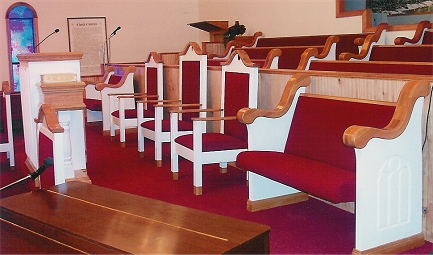
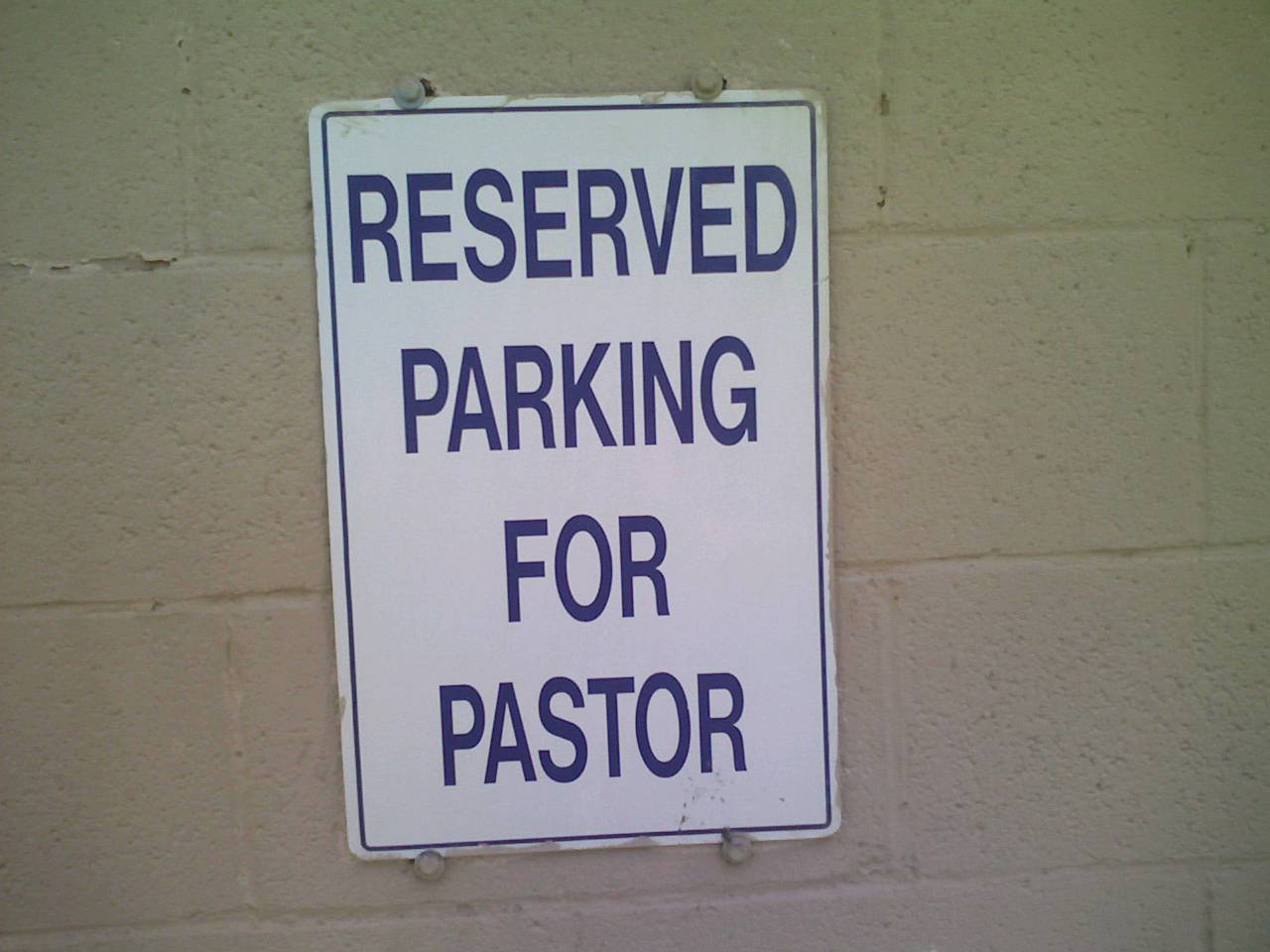
In my own tradition, I couldn’t see the New Testament pattern for pulpits, platforms, thrones, and reserved parking places which you can find in virtually every church. In other traditions, I couldn’t comprehend the spiritual significance of rituals, robes, confessionals, and funny hats. It seemed to me that Jesus had provided a replacement for all of that—himself.
Then one day, as if I needed “fuel on my fire,” I met up with a guy I had heard speak before. His name is Earl Creps. This man changed my life forever.